How it works
Ontario bar exam practice, from purchase to a study plan.
Five steps, from buying a practice exam to knowing exactly what to study next. The one that matters most is step three, the report. It turns a single score into a ranked list of what to fix first.
Buy, then sign in with the same email
Choose what you need from the practice exams page and check out. Sign in at app.ontariobarexam.com with the same email you used at checkout, and your purchase is waiting on your dashboard, usually within a minute. Sign-in is by Google or a one-time email link, so there is no password to create or forget.
Granted additional time or other accommodations by the Law Society? Tell us after you buy and we will match them on your account at no charge.
Sit the full mock, timed like exam day
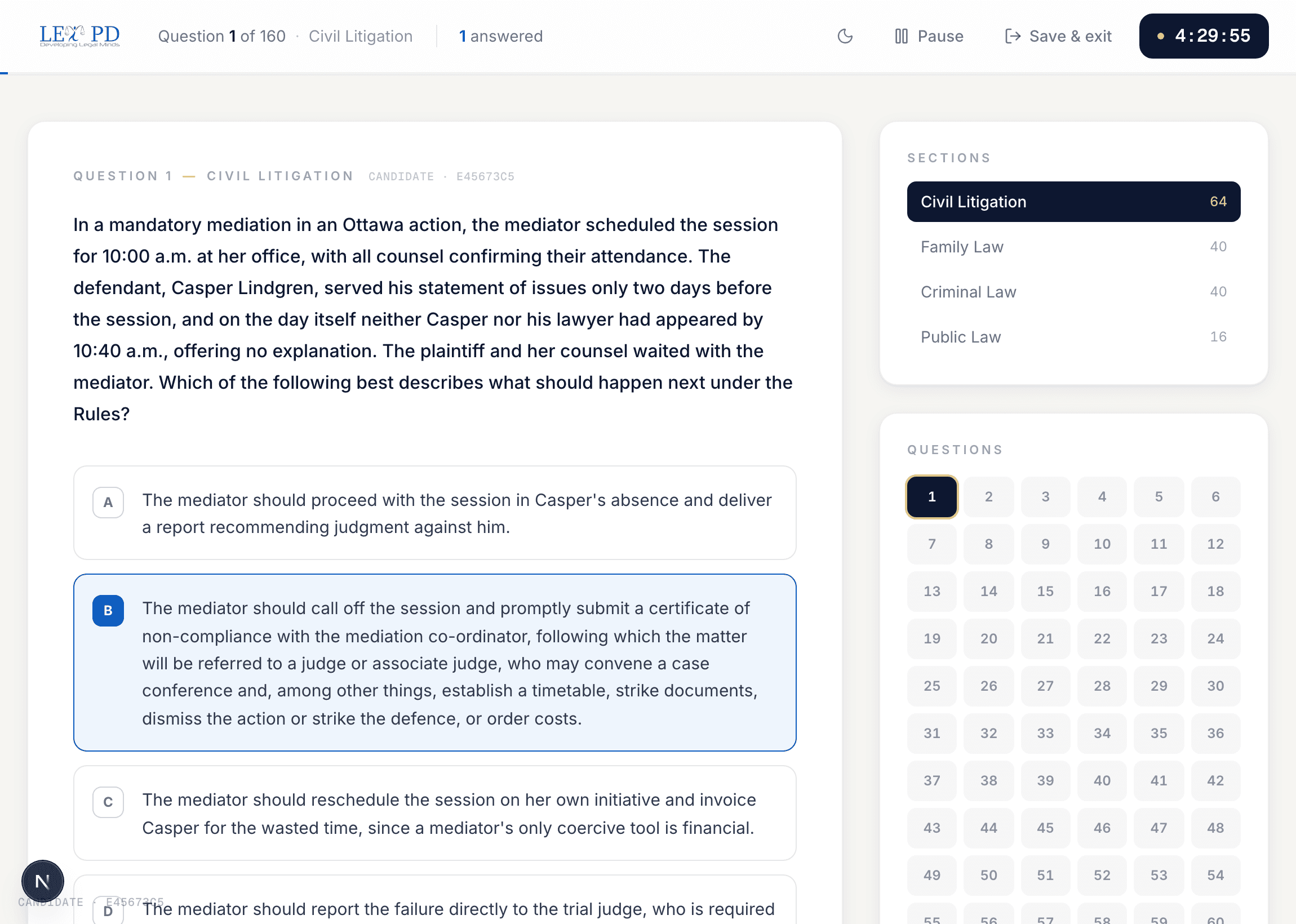
A full mock is 160 questions over 4 hours 30 minutes, grouped into topic sections at realistic weightings. Subject quizzes are untimed, for focused study rather than simulation.
The clock does not start until you press Begin, and it runs on our server, so refreshing, closing the laptop or losing wi-fi changes nothing and every answer stays saved. Move freely between questions, change any answer until you submit, and flag anything to revisit.
Get a report that tells you where the marks went
This is the part that matters. A score alone tells you almost nothing you can act on: 62% does not tell you what to open tonight.
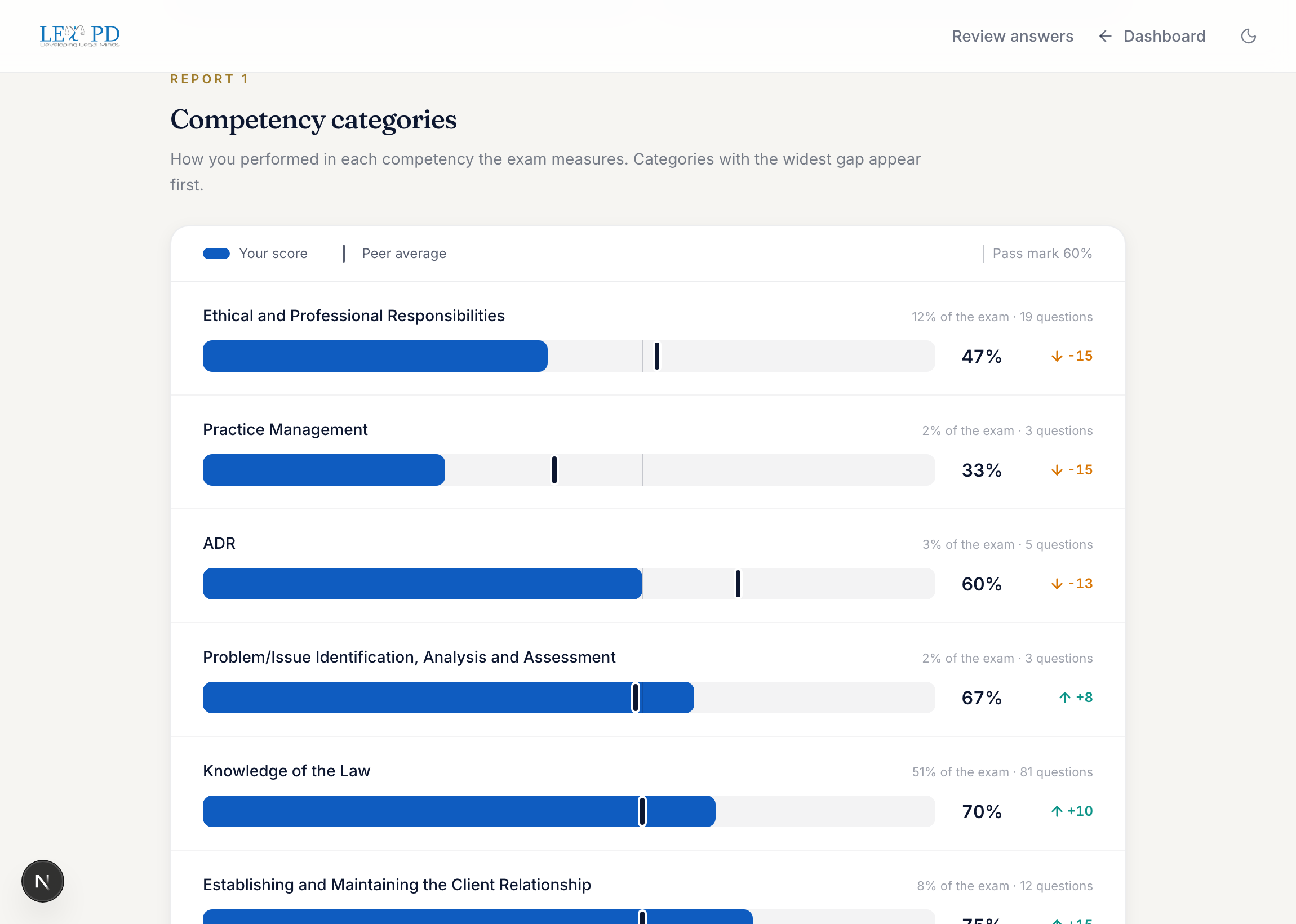
So every report opens with a ranked list of what to fix first, ordered by where you are losing the most marks, not by your lowest percentage. A weak spot in a small section can matter less than a near-miss in a big one, and most candidates study the wrong one first.
Underneath that, your answers get sorted two ways, by lawyering skill and by area of law. You can know every subject well and still lose marks whenever a question asks you to analyse rather than recall, so we bring the two together, and a weak subject narrows down to the exact skill that is costing you.
It also shows what a bare score hides, like the questions you got wrong quickly and never went back to, or where your focus slips across four and a half hours. And it stays honest. It flags any category with too few questions to score fairly, holds the peer comparison back until enough people have written for it to mean anything, and never dresses up a lucky swing between two different papers as real progress.
Review what you got wrong, and only that
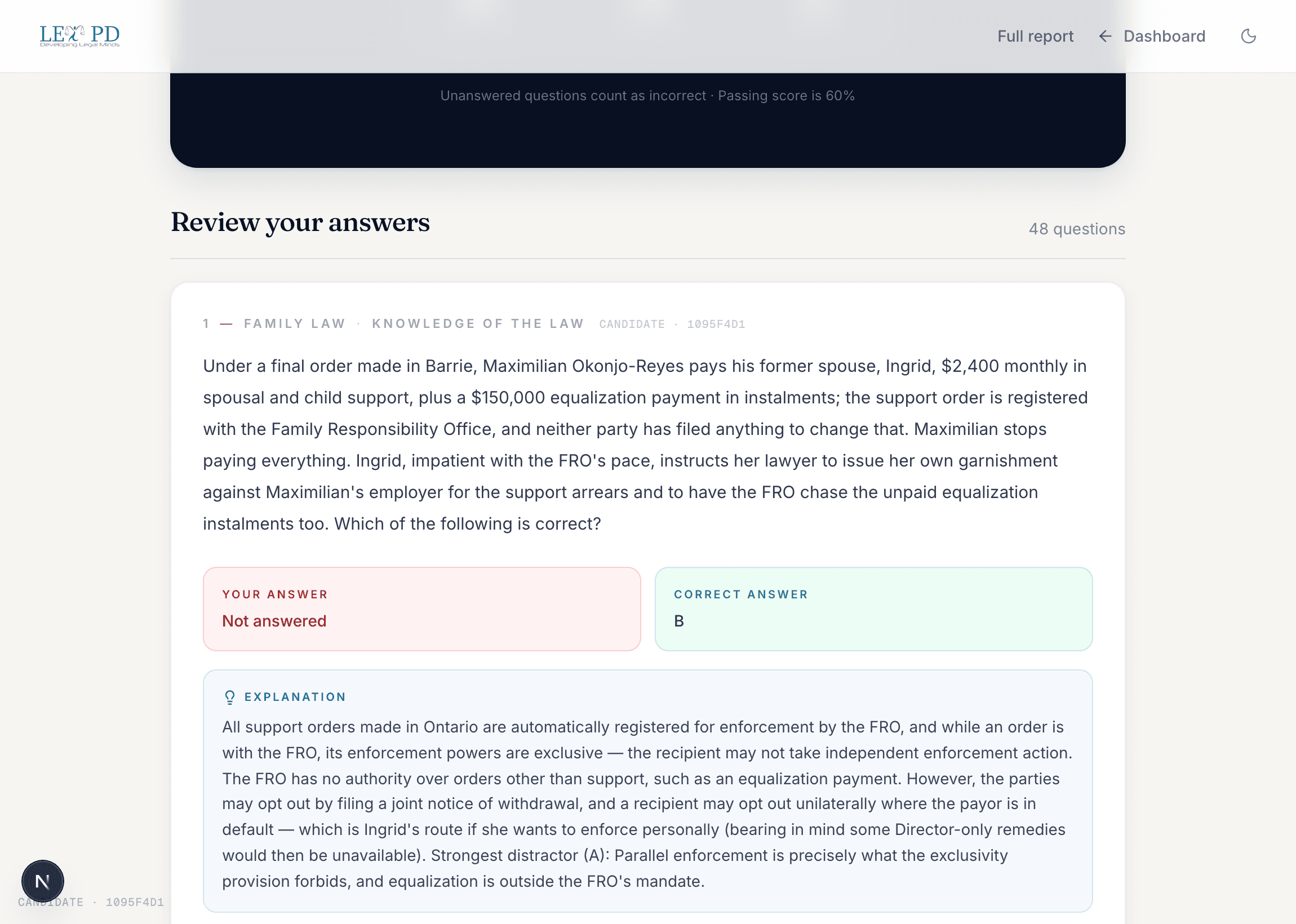
Your review shows the questions you missed, not the whole paper. Re-reading questions you already answered correctly is a comfortable way to spend an evening learning nothing.
Each one shows the answer you chose and the area and skill it tested. At or above our 55% threshold, you also get the correct answer and a full explanation of why it is right and why the tempting wrong answer is wrong. Below that, explanations stay locked, but you still see every question you missed and where it belongs, so you know where to go back. Study, sit it again, and they open up.
Write another, and the report gets sharper
This is the part that compounds. A weakness on one paper might be a bad morning. The same weakness on a second, separately written paper is real, and the report tells you which of yours is which. Sit the same paper again and anything you miss both times gets flagged, so your shortest, highest-value revision is handed to you.
Ready to find out where you actually stand?
Full-length mocks, subject quiz packs, and complete collections for each stream.
OntarioBarExam.com is an independent exam-preparation service operated by LexPD and is not affiliated with, endorsed by, or approved by the Law Society of Ontario. Our questions are written independently and are not reproductions of any actual examination content.